Embark on Romantic Germany: A Cultural and Historical Journey
Opening the door of a German train carriage means stepping into a world where every landscape tells the story of an era. A train journey through Germany is not just a way to get around; it’s an invitation to travel through time, experiencing centuries of culture and history in stylish comfort. From imperial cities to medieval villages, everything breathes the heritage of Central Europe.
In Berlin, the capital of contrasts, the rails take you from the walls of the past to cutting-edge galleries. The Reichstag, Museum Island, alternative neighborhoods: each stop is a discovery. The city is lived at the crossroads of memory and modernity. It’s easy to lose yourself in a labyrinth of stories, between brutalist architecture and baroque salons.
Further south, Munich offers a different atmosphere. Wealthy, traditional, and turned towards the Alps, it embodies Bavaria in all its splendor. Its palaces, beer halls, and markets tell the story of a kingdom turned into a festive and cultured region. The train arrives gently, revealing first the church steeples, then avenues lined with chestnut trees.
A train journey through Germany immerses you in a moving fresco. Train stations are often located in the heart of the cities, making exploration even smoother. You can move from a baroque center to a contemporary district in minutes. And all around, the landscapes unfurl a living backdrop: dense forests, wide rivers, gentle hills, or Alpine ranges.
Heritage is everywhere. Small towns like Bamberg, Rüdesheim, or Weimar are just a few hours away. Each preserves its treasures: Romanesque churches, stone bridges, half-timbered houses. The rail network is dense, punctual, and comfortable. Perfect for following in the footsteps of the German Romantics.
This mode of travel is perfectly suited to those sensitive to history, art, and tradition. To better plan your discoveries, explore our train journeys in Germany, with their main stops and suggestions for cultural itineraries.
An Itinerary Between Nature and Heritage
From north to south, Germany transforms before your eyes. The great plains of Lower Saxony give way to sculpted valleys, then to mountainous terrain. The train becomes the common thread for an immersion into the most iconic German landscapes.
The Rhine Valley is arguably one of the most famous stretches. Between Koblenz and Mainz, the tracks run alongside the banks of the legendary river. Ruined castles, terraced vineyards, villages clinging to cliffs: it all feels like something out of an old tale. With every turn, a new fortress, a new visual poem appears.
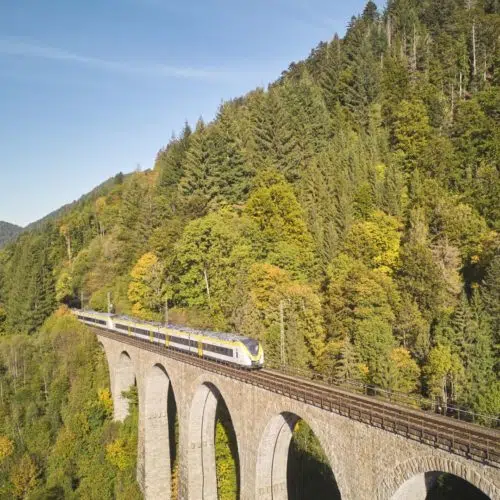
Further west, the Black Forest presents a different face. Here, the fir trees form a dark sea, and lakes glisten under the slanting light. The train winds through the hills, passes through tunnels, crosses streams. It’s a world of legends and tranquility. Spa towns like Baden-Baden or Freiburg complete this soothing atmosphere.
One of the highlights of the itinerary is without a doubt the discovery of Neuschwanstein Castle. Perched on its rock, surrounded by mountains and forests, it embodies the romantic ideal of the 19th century. Accessible from Füssen, this architectural gem is one of the must-see stops on your Germany train journey. It inspires travelers from all over the world and even served as a model for Disney fairytales.
For rail adventure enthusiasts, several regional lines cross Alpine passes or run beside dizzying gorges. Traveling through the Alps by German train combines technical precision and natural beauty. Even the main routes, such as Munich to Salzburg or Stuttgart to Zurich, offer stunning scenery.
In every city, a new immersion awaits you. Gothic cathedrals, baroque squares, modern art museums… Germany elegantly blends eras. Thanks to the network’s fluidity, you can string together discoveries at your own pace, without rushing.
To extend the experience or broaden it to other countries, explore ideas for train journeys across the continent. Germany is an ideal gateway.
German Flavors and Local Specialties at Every Stop
A train journey in Germany is also a journey for the senses. Each region has its signature dishes, picturesque markets, and welcoming beer halls. The carriages do more than transport passengers; they also guide them from table to table, from one regional product to the next tradition.
In Berlin, the culinary scene is cosmopolitan. Currywurst, pretzels, craft beers, but also street food from around the globe. Covered markets like Markthalle Neun offer a great introduction to German specialties, reinvented with boldness.
In Bavaria, tradition reigns supreme. In Munich, try a Weißwurst sausage in the morning with a light blond beer. Settle in at a Wirtshaus for roast pork knuckle, braised cabbage, or piping hot Apfelstrudel. Breweries like the Hofbräuhaus are institutions.
The Rhine Valley is the kingdom of white wine. Riesling, Sylvaner, or Gewurztraminer are enjoyed in troglodyte cellars or at local festivals. They are often paired with freshwater fish or game dishes. Villages such as Bacharach or Oberwesel offer perfect stops to combine panoramic views and tasting.
In the Black Forest, the black cherry reigns. You’ll find it in jams, cakes, and liqueurs. The famous Black Forest cake truly comes into its own here—far more intense than anywhere else. It’s also a region of matured cheeses, fine charcuterie, and rustic tarts.
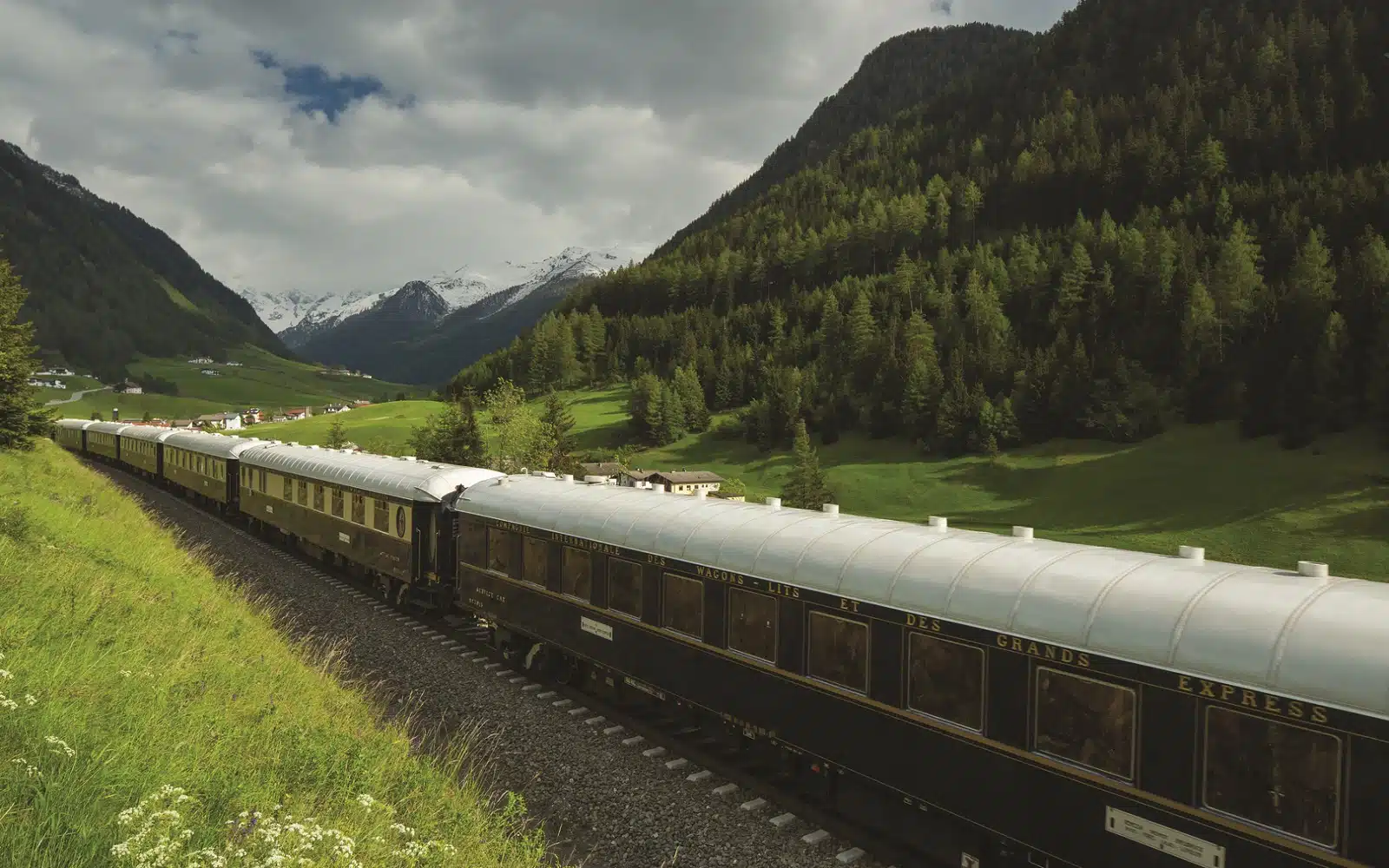
On certain lines, trains offer onboard dining experiences worthy of starred restaurants. Those who wish to combine refinement and movement can opt for a luxury train, where meals are served in dedicated dining cars with Belle Époque decor.
The German Christmas markets are also easily accessible by train. Cologne, Nuremberg, and Dresden all turn magical in December. Mulled wine, gingerbread, grilled sausages—everything lights up and delights in a warm atmosphere. The train journey through Germany then takes on a magical dimension.
At every stop, a culinary surprise. In each region, a different accent, a specialty, an invitation to slow down and savor. Eating in Germany means experiencing another side of its culture and history, passed down through recipes and local products.